Web stores were never the endgame. They were the first step in a larger shift: the move from closed platforms to open ecosystems. We call this shift DTC 2.0.
For a while, “going direct-to-consumer" meant building a web store and getting your most loyal players to use it. It was the workaround that let publishers take back control of margins, data, and player relationships. It worked. Today, web stores are not an experiment - they’re the competitive standard. But the DTC opportunity today is so much bigger than just web stores.
The Turning Point
On April 30, a U.S. court ruling made it official: developers can place buttons, banners, and calls to action inside their iOS apps that link directly to external payment flows, without paying Apple a commission. Overnight, the iOS walled garden sprouted a gate.
The chart below shows what’s at stake: the top ten publishers’ annual U.S. iOS in-app purchase revenue, and the extra profit they could capture if transactions moved from Apple billing to external payment providers charging a 5% fee. In total, that’s $1.6 billion of yearly margin opened up by a single ruling.
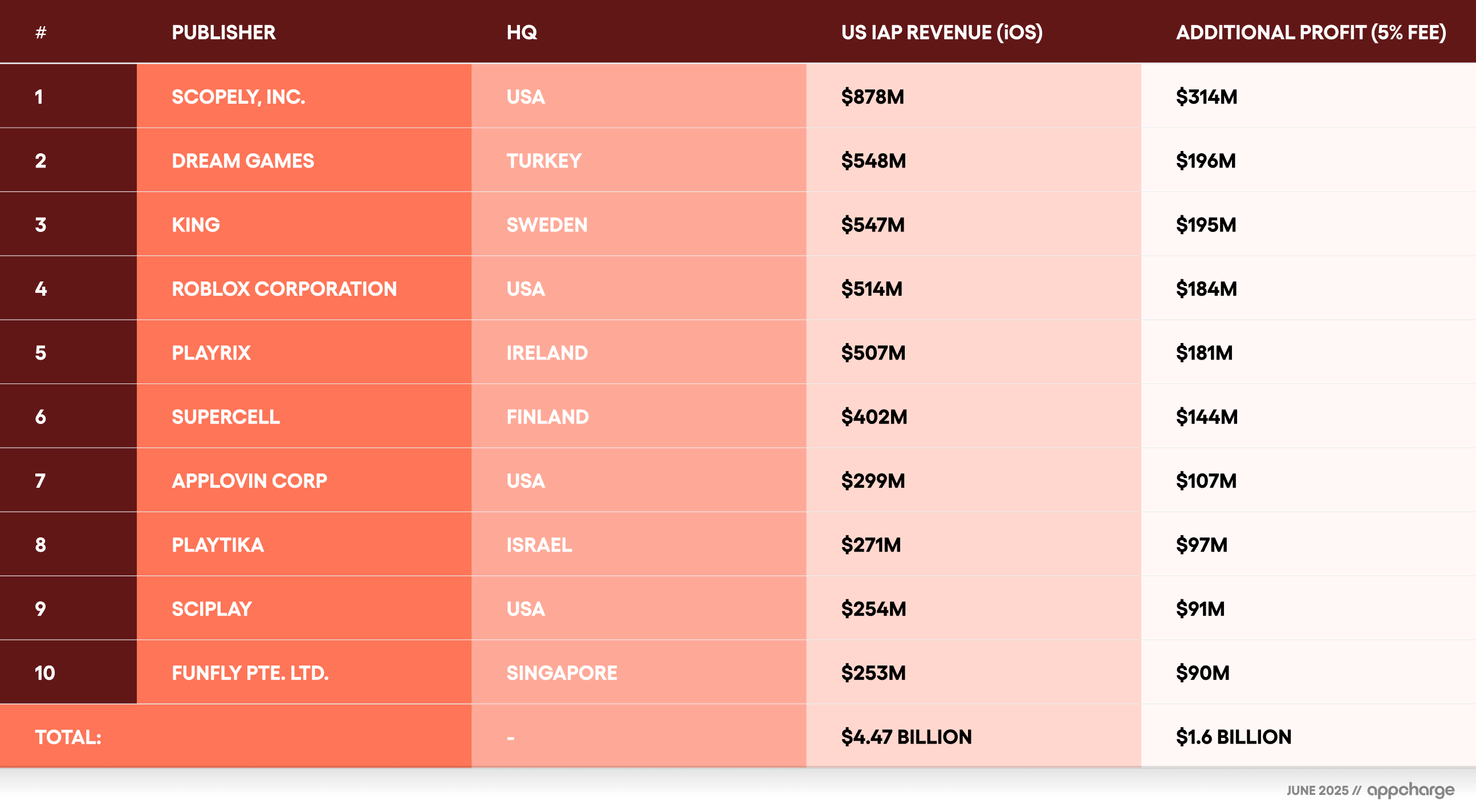
It’s a major milestone and a signal of the DTC opportunities that exist beyond web stores.
What DTC 2.0 Looks Like On The Ground
When I was leading monetization at one of the world’s largest mobile game studios just a few years ago, the player journey was predictable. The app store was the start and the end and IAPs meant one thing.
Today, a purchase might happen in a multitude of forms that bypass Apple or Google's billing: a WebGL browser session, a sideloaded Android APK from an OEM or alternative store, a native iOS (and sometime soon Android) app that links out to an external checkout, or a web store designed for loyalty and high-intent purchases.
It isn’t about ditching traditional app stores - they will stay vital for discovery and onboarding. What is changing is where the transaction happens, and who runs it. That spread creates new technical needs, new rules to follow, and new chances to innovate.
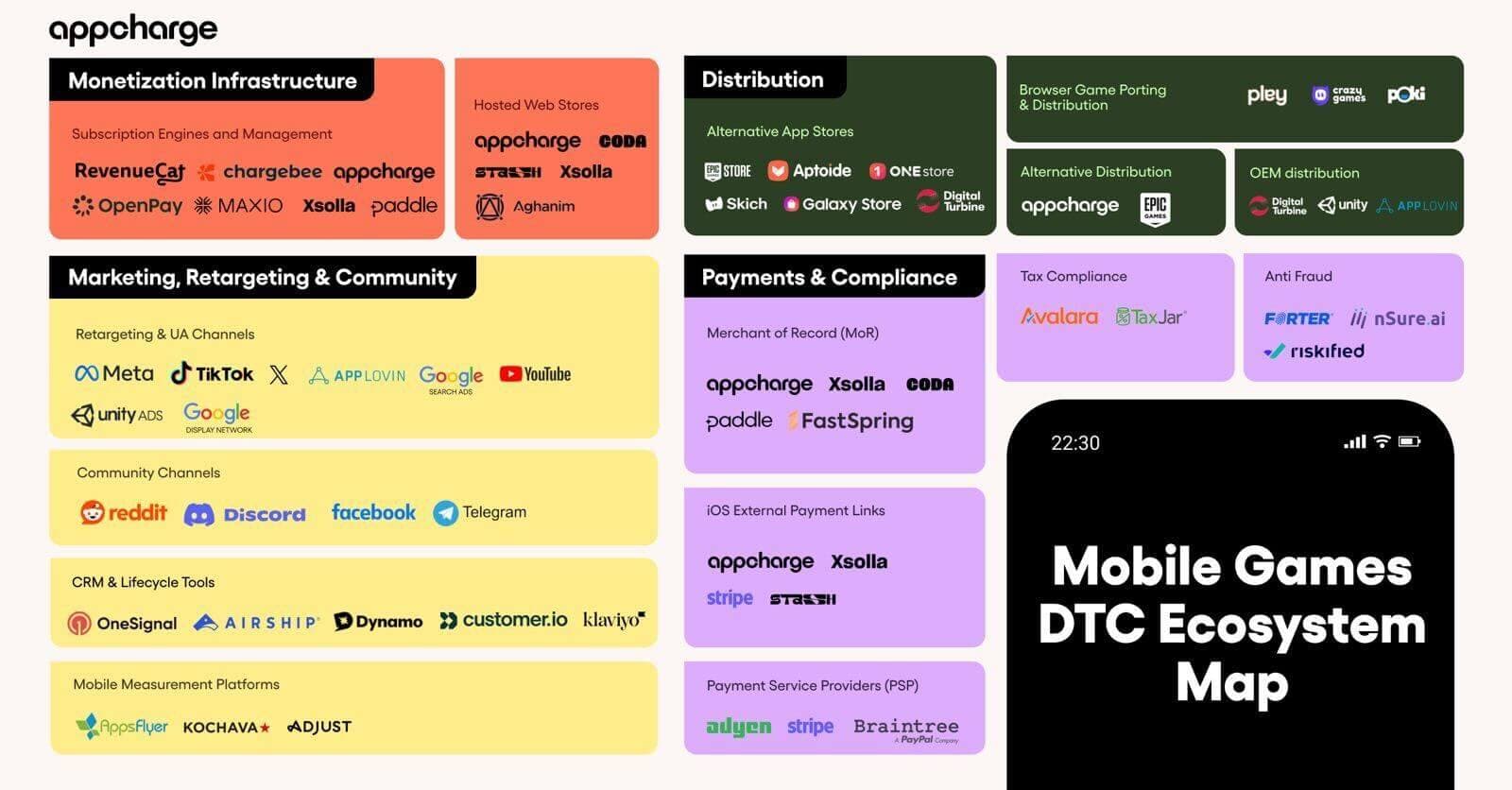
The map below shows how broad this space already is - from monetization tools and payments to distribution and compliance.
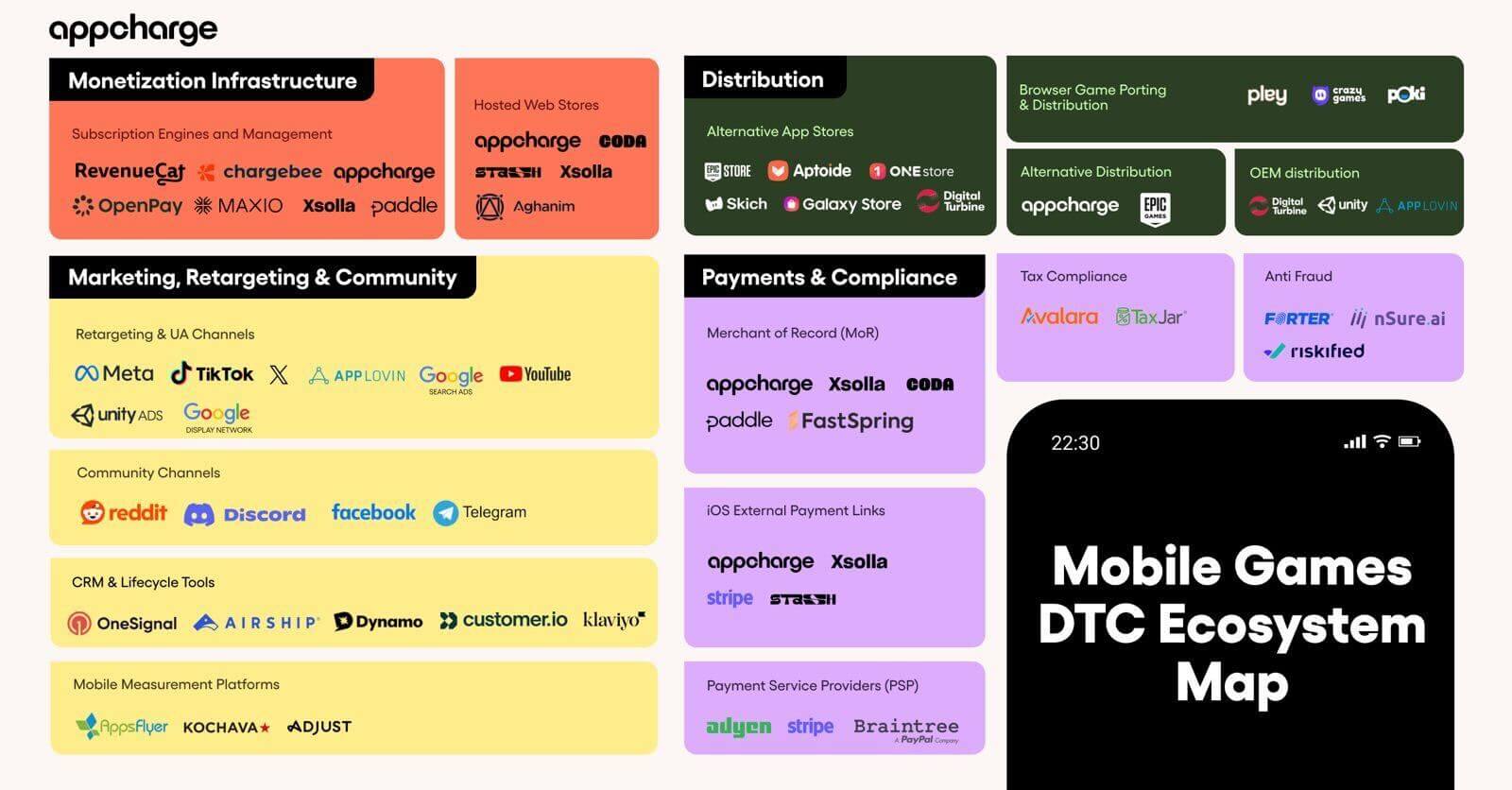
At Appcharge, our focus is tying key DTC surfaces together so teams can have a single platform for running web stores, external payment links for IAPs on iOS and Android, and APK distribution and versioning with the operational pieces - tax, chargebacks, reporting - handled behind the scenes.
Why This Moment Matters
The signs all point the same way. Over 70% of top grossing games use web stores. Browser gaming is projected to climb from $7.73B in 2024 to more than $8B in 2025. The Epic Games Store mobile app has been downloaded 40 million times since its 2024 launch.
Regulators are opening new doors, but unevenly - different regions, different rules, different timelines. The road is opening, but not in a straight line.
Looking Ahead
DTC 2.0 won’t sideline app stores, which remain the front door for discovery and scale. What changes is the mix of surfaces where players actually pay. Over the next 12 months, expect more testing of OEM and alternative stores on Android, more browser sessions that lead to real checkout, and more monetization flows that sit outside the app store entirely such as iOS and Android payment links.
Competition will heat up in payments, compliance, and distribution, and consolidation will come later. For now, publishers are in an era of choice and experimentation - and speed will separate the leaders from the rest.
Final Thoughts
Web stores changed the industry. They proved publishers didn’t have to accept the old rules. But they were the beginning, not the destination.
DTC 2.0 is that next leg of the journey - a world spread across different surfaces, shaped by how players really play and pay. The road isn’t uniform, but it is widening. The teams that move fastest, adapt to rule changes, and make the parts work together will lead the industry forward.