External Payments Arrive On Android in Europe (Here’s Google's Catch)

On August 19, 2025, Google announced major changes to its Play Store rules in the European Economic Area (EEA). Under pressure from the Digital Markets Act (DMA), Google is finally allowing publishers to guide users to external websites to complete purchases - but only within a tightly controlled framework.
TL;DR for Publishers
- Yes, you can now steer players outside Google Play for payments or app downloads.
- But: all external links face a Google warning screen, and every transaction must be reported back to Google.
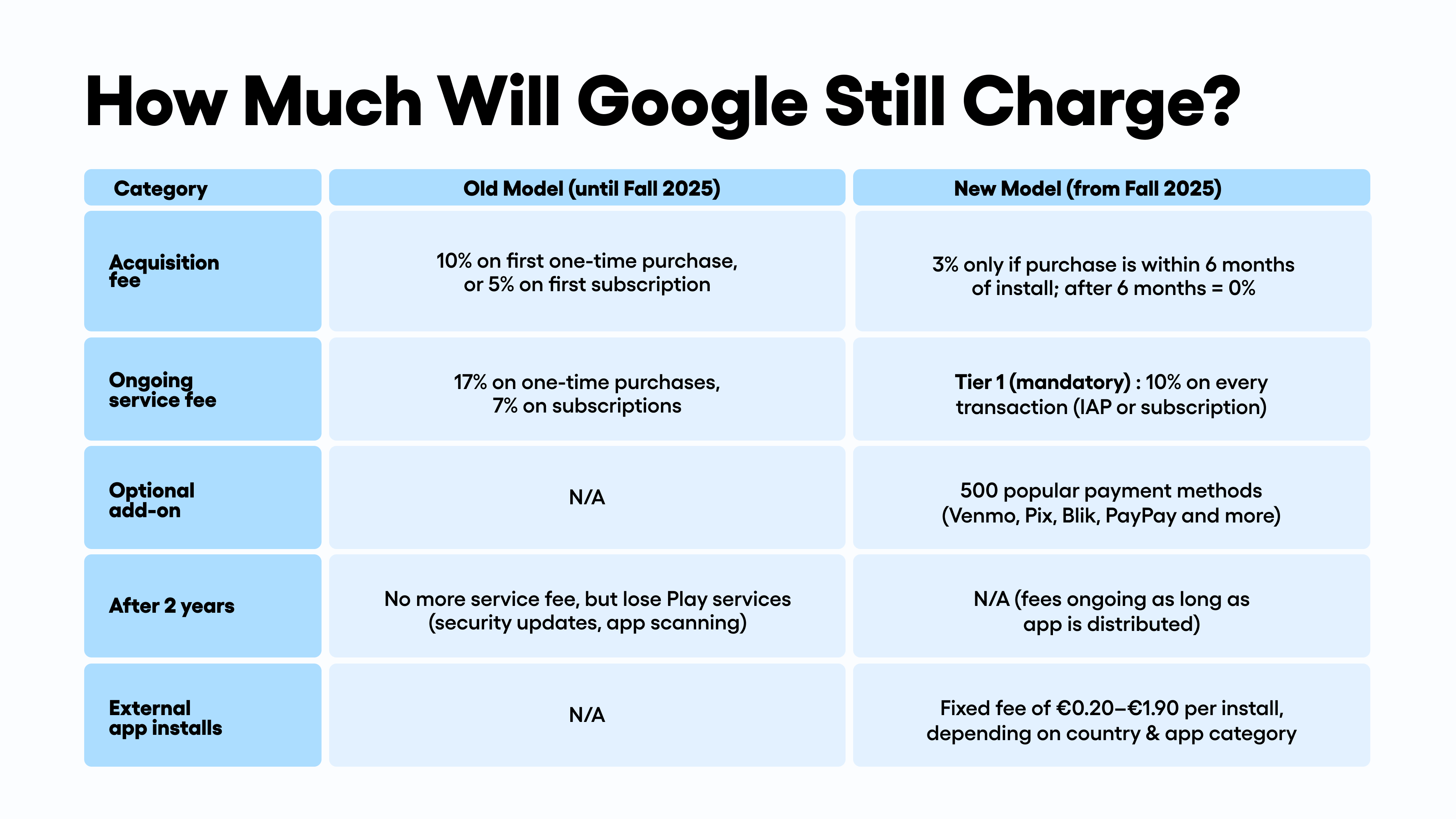
- Fees are lower than the old 30%, yet Google still collects a cut even if they don’t process the payment.
- The new tiered fee system rewards those who pay extra for visibility on Play.
We don’t expect most publishers to overhaul their payments systems just yet, as the operational overhead and disclosure screens will keep many cautious.
What’s Changing: Google's External Offers Program (EOP)
EOP is Google’s compliance response to the DMA. Once enrolled, publishers can add in-app links that send users to an external site for purchases and later in 2025, for app downloads.
Key restrictions:
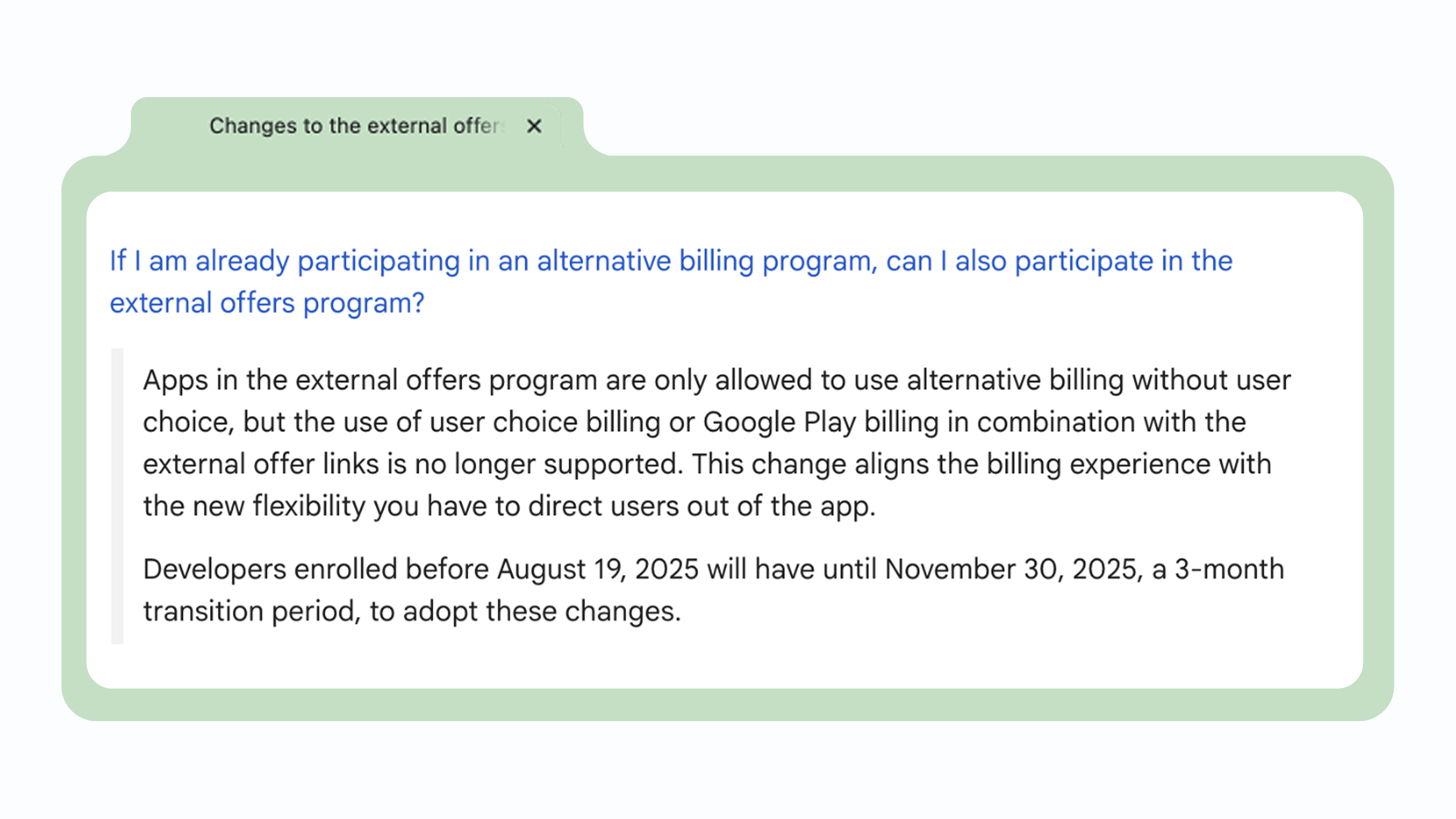
- Apps in EOP cannot also use Google Play Billing or User Choice Billing.
- All links must pass through Google’s disclosure screen.
- No mentions of external offers are allowed on Play Store listings.
- Personal data cannot be passed with the link.
- All external transactions must be reported to Google within 24 hours.
What It Means for Publishers
The new framework is a step forward and expands publishers' ways to reach users. But:
- The disclosure screen will add friction, hurting conversion rates.
- Reporting obligations and customer support requirements add operational load.
- Even outside Play, publishers still pay fees that can reach meaningful levels, especially with Tier 2.
The EOP is a meaningful shift but not a complete overhaul. There is a legal way to take users outside Google Play for payments, yet the framework brings new obligations, conversion risk from warning screens, and fees that remain significant, especially for those who opt into Tier 2. Ultimately, Europe now has a new equilibrium: external payments are possible, but Google still holds the levers.
Choosing a path forward will depend on each publisher’s ability - and willingness - to take on more of the payment infrastructure themselves, or to rely on external solutions to manage that complexity.
Bottom line: external payments are possible — but not simple.
Get in touch to see how we can help