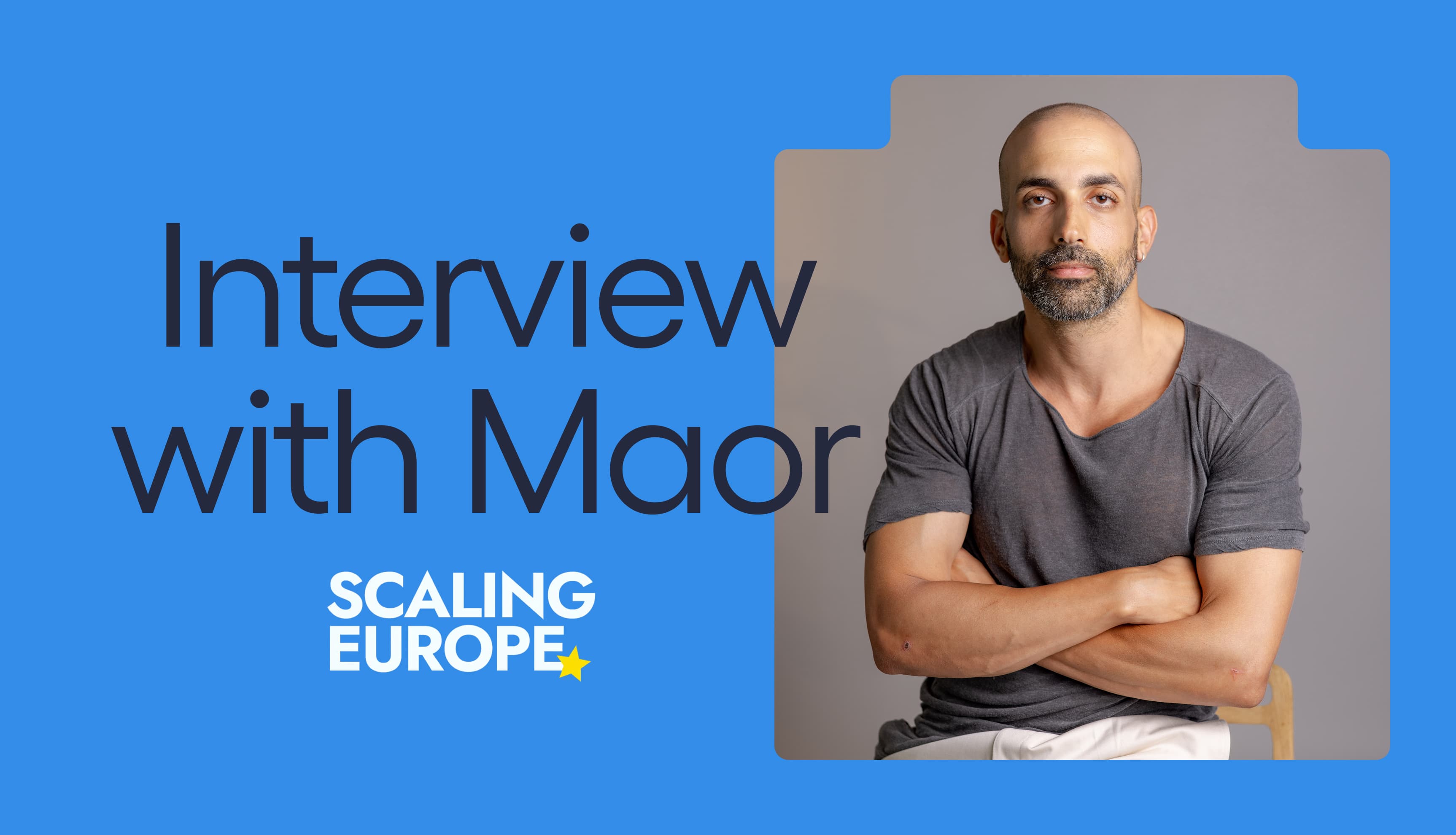
Maor Sason and Roei Barassi sat down with Deconstructor of Fun for a wide-ranging conversation about co-founder dynamics, leadership, and what it really takes to scale a company under pressure. The discussion goes beyond growth metrics - touching on friendship as a founding advantage, how to handle conflict without breaking trust, the differences between first- and second-time founders, and the personal tradeoffs that come with building a global company while staying human.
Founder dynamics: friendship, conflict, and complementary energy
One of the strongest threads in the conversation is how Maor and Roei think about co-foundership - not as a functional pairing, but as a human relationship under pressure.
Maor is unequivocal about the role friendship plays:
Maor: “Is it important to be a friend when you’re co-founders? It’s mandatory. Eventually, you’re building a group of people - a tribe of leadership. If the leaders of this tribe are not friends, not in a good relationship, it trickles down to the rest of the company."
For Roei, friendship doesn’t remove conflict - it makes conflict survivable:
Roei: “It’s not easy to build a company. Period. But it makes it way smoother and faster if you have trust, friendship, and respect."
They’re explicit that conflict is part of the job. The difference is how it’s handled.
Maor: “Thoughtful disagreements are very, very healthy. We’re challenging each other constantly. Sometimes it heats up, but we’ve learned when we’re too emotional - when to stop, give it space, and come back tomorrow."
That dynamic is reinforced by their contrasting temperaments. Roei describes himself as grounded, sometimes pessimistic; Maor as relentlessly optimistic:
Roei: “Sometimes I finish a call thinking it was awful, they’ll never say yes. And Maor says, ‘What are you talking about? They’re interested.’ I ask myself - were we on the same call?"
Maor: “It takes only one yes."
That tension, they argue, is not a bug. It’s the engine.
⸻
The founder journey: experience, pressure, and personal tradeoffs
Although Maor is technically a second-time founder, he resists the label.
Maor: “I don’t feel like a second-time founder. I’m still a student. I’m learning every day."
What experience does give him, he says, is confidence - but only when paired with humility:
Maor: “Confidence is dangerous. It has to come with humility. Just because you were right once doesn’t mean you know it all."
Roei explains that Maor’s prior experience was one of the reasons he felt comfortable starting Appcharge together:
Roei: “One of the inputs for me was that Maor is a second-time founder. Our chances were better. He’s seen things I haven’t."
The conversation also gets personal around family, obsession, and balance. Roei speaks candidly about setting expectations before starting:
Roei: “We decided together. My wife gave me the green light and said: go do it, I’ll support you. We set expectations before we started."
Maor takes a different view - less about compartmentalization, more about integration:
Maor: “If you’re obsessed, you’re obsessed in everything - work, family, life. It’s a trait. You don’t turn it on and off."
Both agree there’s no perfect balance - only intentional tradeoffs.
⸻
Scaling the business: fundraising, speed, and learning to hear “no"
On fundraising velocity, the founders strip away the mystique. The core drivers are simple, but hard to execute.
Roei: “It’s a combination of building a great team fast, being innovative, listening to feedback, and the velocity the team helps us achieve - product, sales, business development."
Maor emphasizes radical transparency with investors:
Maor: “You open the kimono. You show everything as fast as possible. Top-tier investors are smart - they’ll examine the market, the team, where you are in the race, and whether you can win it."
Due diligence, they say, is repetition:
Maor: “It’s like speed dating. You practice being good at it. You bring references. They want to hear from your clients - do they trust you? Do they want a long-term relationship?"
They’re also blunt about rejection:
Maor: “You take the pinch. Then another no. And another. Eventually it’s not so painful. You learn that as a founder, you’ll get far more nos than yeses."
Crucially, they frame “no” as a starting point, not an end:
Maor: “No is actually useful. You can ask - why not? What would make you invest? The worst thing is a fake yes."
On capital itself, Maor is cautious:
Maor: “Raising is a win - but it’s one win. Not the win. You celebrate, then you get back to work."
And his advice between rounds is clear:
Maor: “Don’t raise too early. Set targets, hit them, talk to one or two investors, get feedback. Then decide if it’s the right time."
⸻
Product and strategy: why DTC is hard and where the moat lives
A recurring theme is the misconception that web stores are simple.
Maor: “People think a web store is just a landing page. But it’s almost like building another game on the web. It’s complex. You need engineering power, product power, and service - and even then, you’re never done."
They position Appcharge not as a single product, but as a DTC suite built from lived pain:
Maor: “We started from a pain we experienced ourselves. The goal was to take any publisher and get them live globally within days."
On build vs buy, they acknowledge that large studios can build internally. The question is whether they should.
Maor: “The real cost isn’t just development. It’s focus. It’s alternative cost. What could you have built instead while spending months on this?"
Roei adds that trust and long-term partnership matter more than theoretical capability:
Roei: “Developers don’t want to change vendors every year. Instability has a cost. They want someone they can trust and run with long-term."
Ultimately, the moat shows up in results:
Maor: “Game developers are extremely data-driven. At the end of the day, the numbers talk. That’s where the moat is expressed."
⸻
Team and culture: scaling globally without becoming corporate
Despite fierce competition for talent in Tel Aviv, Maor sees it as an advantage:
Maor: “We’re competing with Google and Meta - and we’re winning. Being part of a fast-growing startup with a real mission is very appealing."
As the company scales globally, culture has to travel.
Maor: “First and foremost, it’s the mission. Direct-to-consumer is a real pain everywhere in the world. People relate to that."
They anchor culture in values, not slogans:
Maor: “One value is ‘It’s your company too.’ Another is ‘Say yes first.’ It’s about ownership, teamwork, and how you conduct yourself day to day."
Process, they argue, is inevitable - but politics is optional:
Maor: “You can’t scale this fast without processes. The goal is to take the good things from corporate - structure, clarity - and combine them with startup speed and innovation."
⸻
Final advice from both founders
Maor’s guidance to second-time founders centers on people and purpose:
Maor: “Choose carefully who you’re going to march on this journey with. And be connected to the mission. Would you ask your best friends or your sister to join? If the answer is yes, you’re on the right path."
Roei’s advice is practical and human:
Roei: “Build the best team you can. Take a mentor. And celebrate success - with your co-founder and your team. Those moments matter."