TL;DR
Android is opening up. Following a major antitrust ruling, Android developers will soon be allowed to include external payment links inside their apps for U.S. players - pending any last-minute delays from Google.
If the current timeline holds, enforcement begins on October 29, 2025.
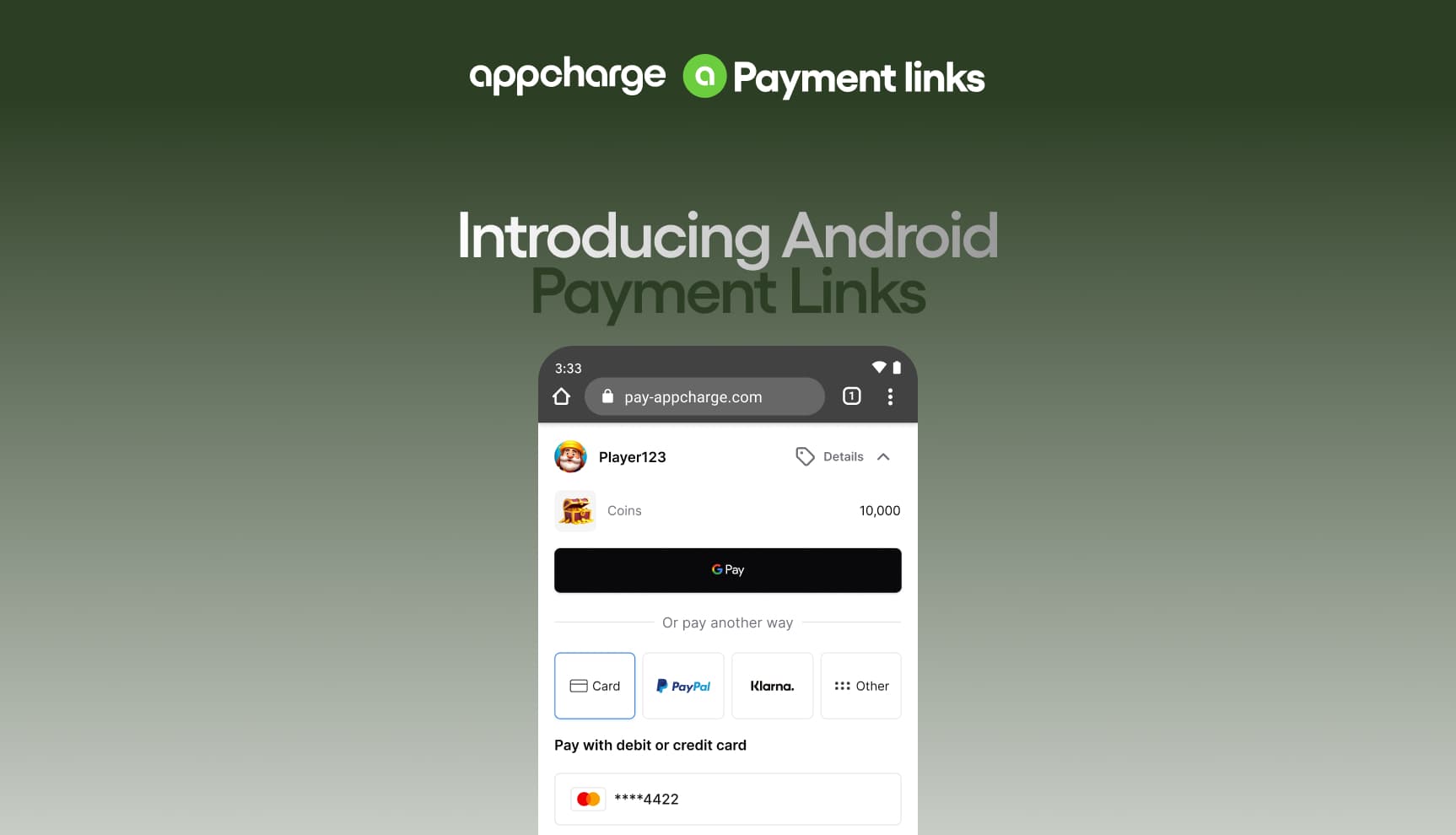
We’re excited to introduce our new Android Payment Links solution - built on insights from over 50 iOS Payment Links rollouts we’ve helped our clients launch. It’s available in beta now, and set for global release on November 5.
Publishers can integrate Android Payment Links through two integration paths:
- External browser link-outs (the same proven method used in our iOS Payment Links)
- SDK integration for a more native, embedded feel
Both methods offer:
- Seamless in-app UX with automatic return to gameplay
- External default browser, or in-app browser (Chrome Custom Tabs, or CCT)
- Conversion-optimized & battle-tested checkout
- Inherited browser logins and payment data for higher conversion
- Visual customization to match your game’s look and feel
What Are Chrome Custom Tabs (CCT)?
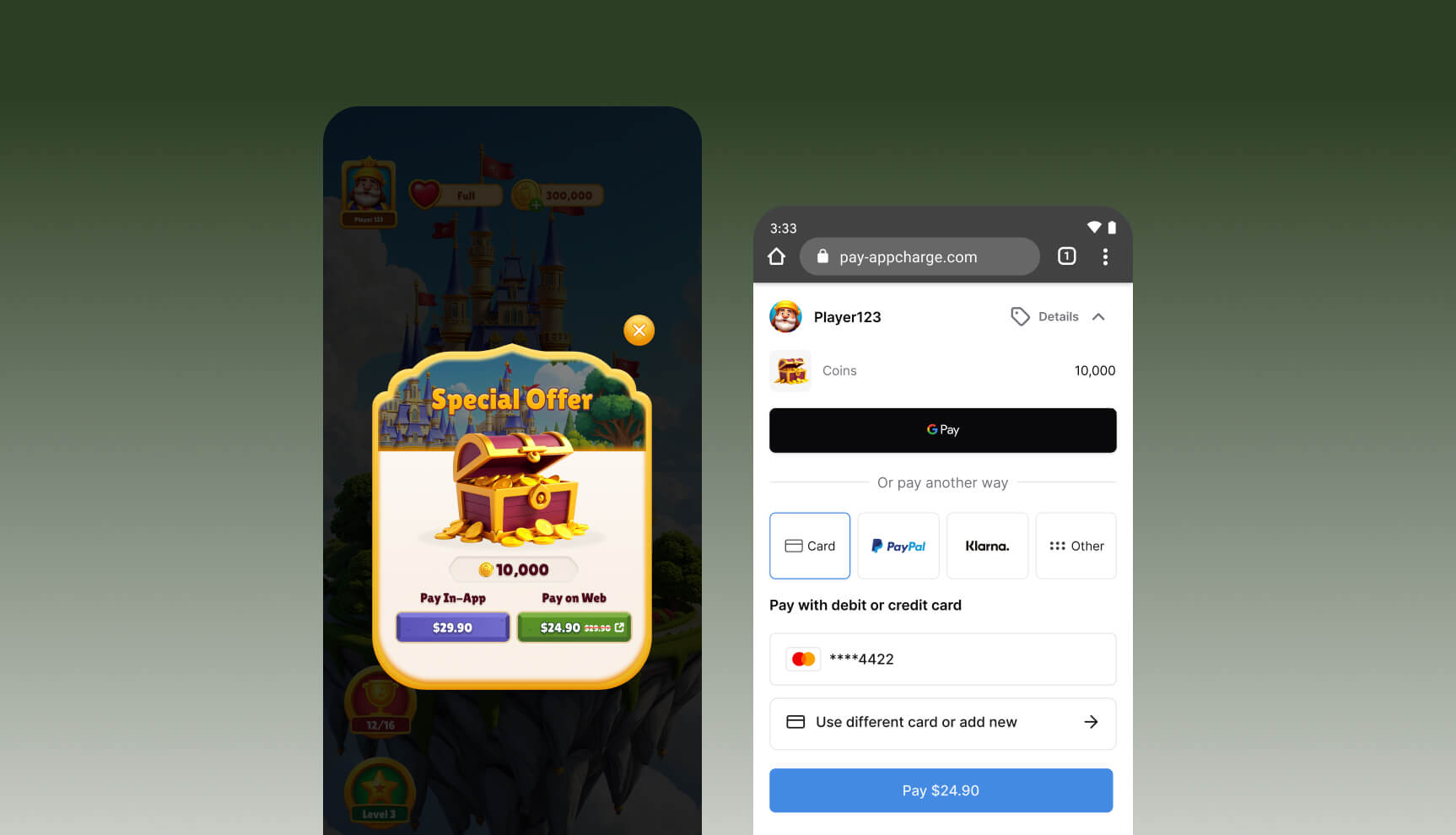
By supporting CCT, we power an embedded experience in the app.Unlike standard external browsers, CCT allows players to complete their purchase inside the app. Once checkout is done, the browser closes automatically and the player returns to gameplay - a far superior experience.
In addition, CCT is powered by the user’s preferred browser (usually Chrome) and they inherit saved logins, payment methods, and cookies - reducing friction and boosting conversion. You can also match your app’s branding (toolbar colors, animations) and retain the back button to return to the app.
What We’ve Learned from 50+ iOS Payment Links Rollouts
Over the past six months, the industry has been running one big live experiment:
What really happens when mobile games start offering external payment links?
The results have been eye-opening - and overwhelmingly positive. Across 50+ Payment Links rollouts with top publishers, a clear story emerged - Payment Links don’t just work, they unlock an entirely new growth channel for DTC.
Here’s what we’ve seen firsthand.
Up to 92% checkout conversion rate
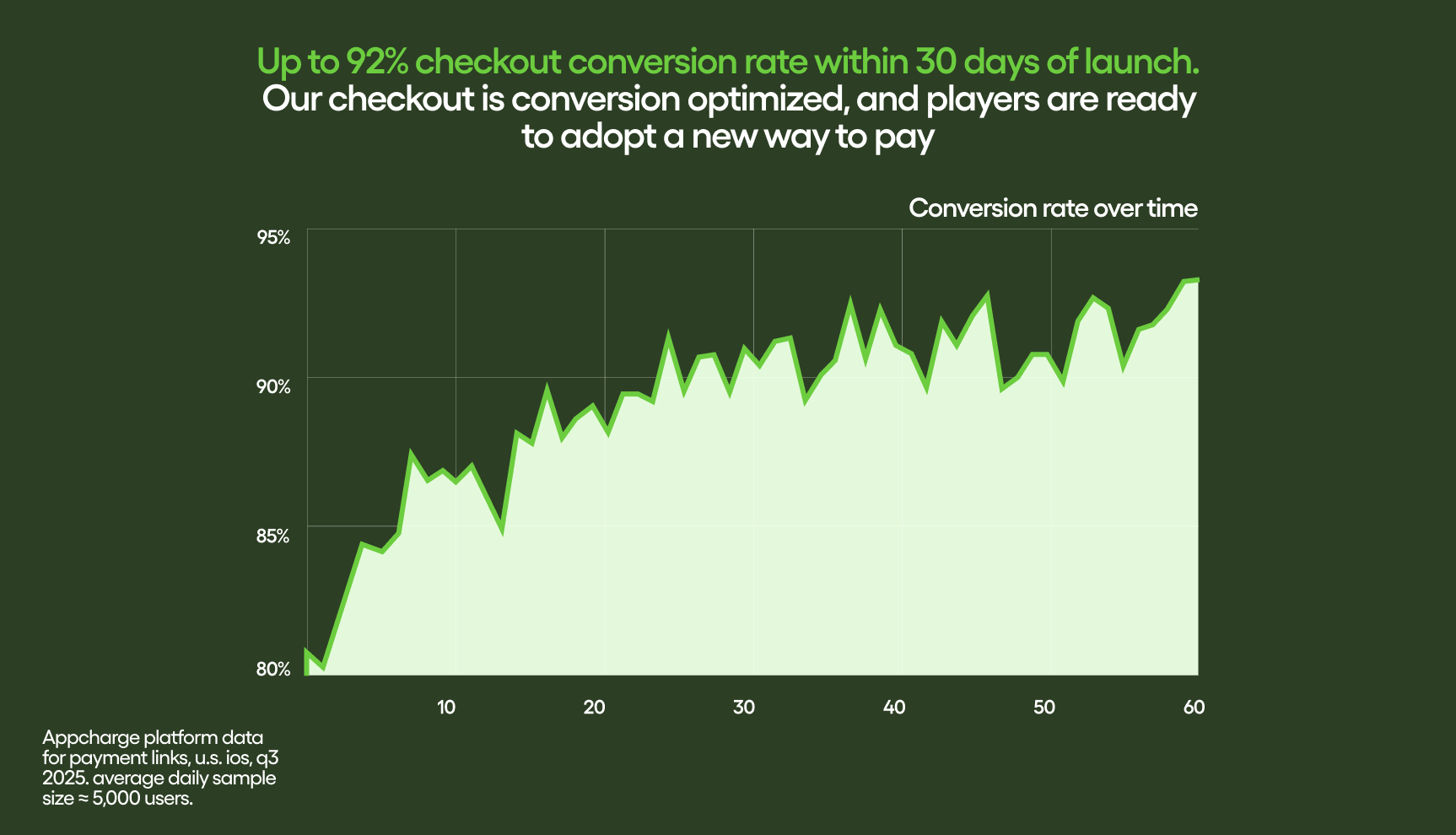
We’ve seen that Payment Links checkout conversion rates climb rapidly after launch, as players quickly adapt to the new purchase flow. In many rollouts, conversion rates continue to improve week over week, reaching as high as 92% within the first 30 days. It’s a clear sign that once players experience the simplicity and familiarity of browser-based checkout - especially when it feels seamlessly integrated into the game - they embrace it without hesitation.
55% of Payment Links buyers were completely new to DTC, 25% become regular web store purchasers
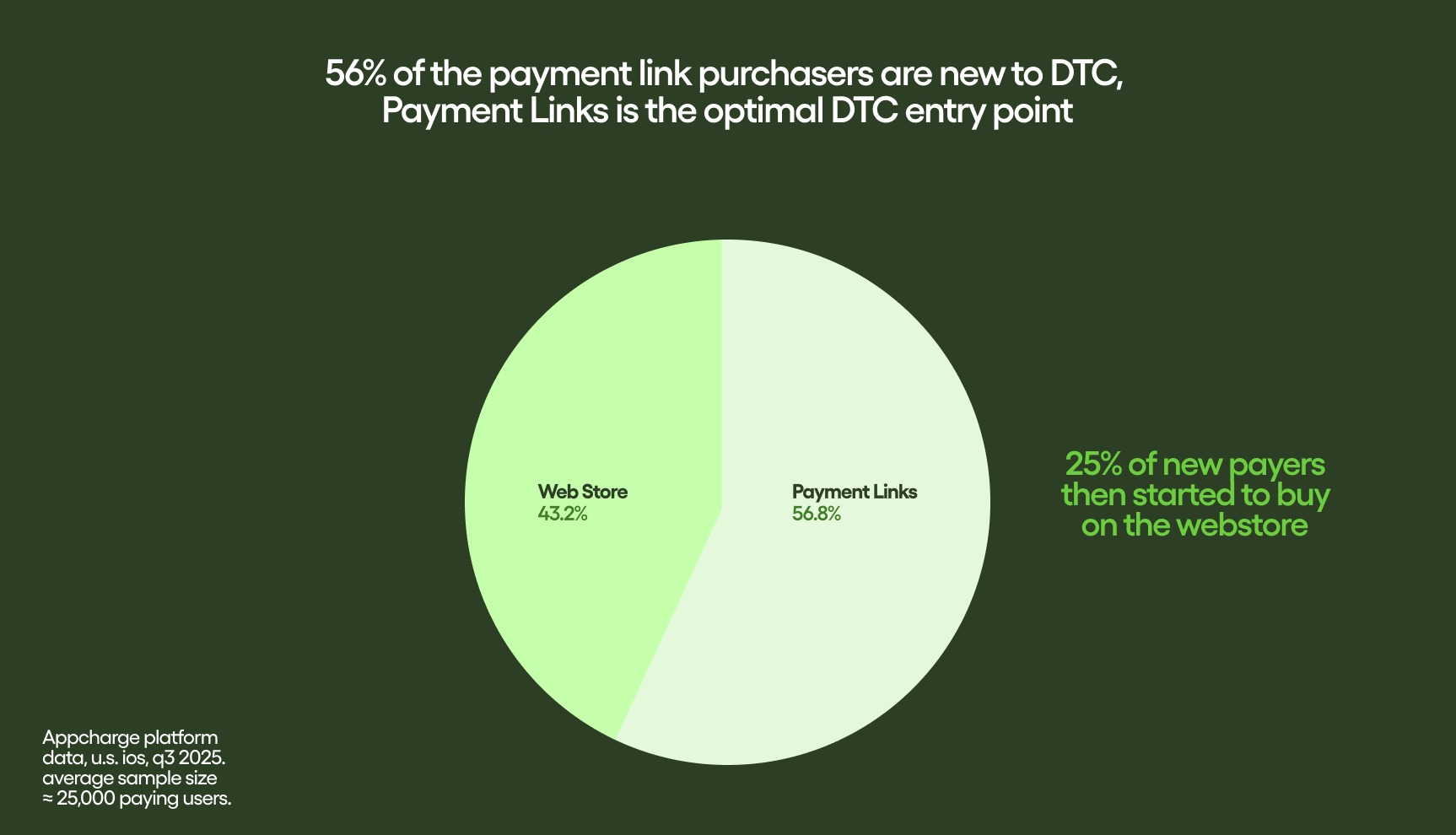
In our platform-wide data, 55% of players who made a purchase through Payment Links were completely new to direct-to-consumer (DTC) transactions - making it the most effective entry point we’ve seen so far. This means Payment Links aren’t just converting existing in-app buyers; they’re introducing a whole new segment of players to DTC for the first time. By blending familiarity (in-app context) with simplicity (browser-based checkout), Payment Links lower the barrier to entry and help studios grow their direct relationships with players in a way that feels natural, convenient, and rewarding.
Even more encouraging, 25% of those first-time Payment Links buyers went on to become regular web store customers. This shows that Payment Links don’t just spark one-time transactions - they build habits. Once players experience the ease and reliability of buying directly, many return to the web store for future purchases, deepening their engagement over time. It’s a powerful signal that Payment Links can do more than boost short-term conversion - they can create lasting behavioral shifts toward sustainable, long-term DTC growth.
No cannibalization
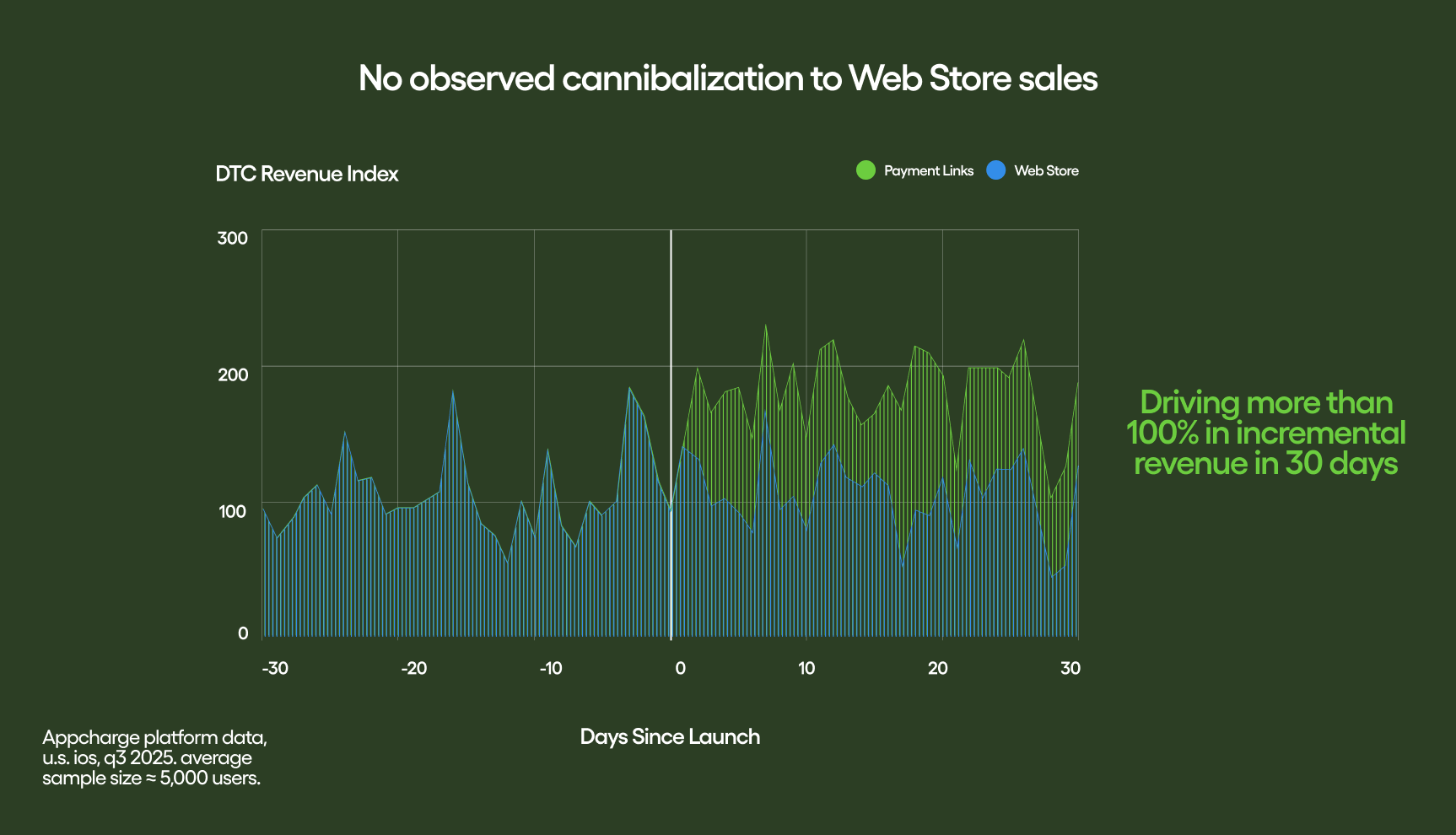
Our data shows no cannibalization between Payment Links and existing web store sales. In fact, the results show the opposite!
Players who previously purchased through the web store maintained their same level of web store spend even after Payment Links were introduced. When adding their new purchases made through Payment Links, these players generated a 100% incremental increase in total DTC revenue. In other words, every Payment Link transaction represented true growth, not a shift from another channel. This reinforces that Payment Links complement rather than compete with web stores - acting as a powerful new DTC entry point that expands overall revenue and strengthens long-term player monetization.
How Appcharge Payment Links Are Built to Help You Win
Secured
Built from the ground up with security a priority, we have industry-leading mechanisms that ensure no secrets are required in the client device, prevents checkout token abuse, and validates publisher servers through server-to-server communication - not client-to-server.
Conversion-optimized & Battle-Tested
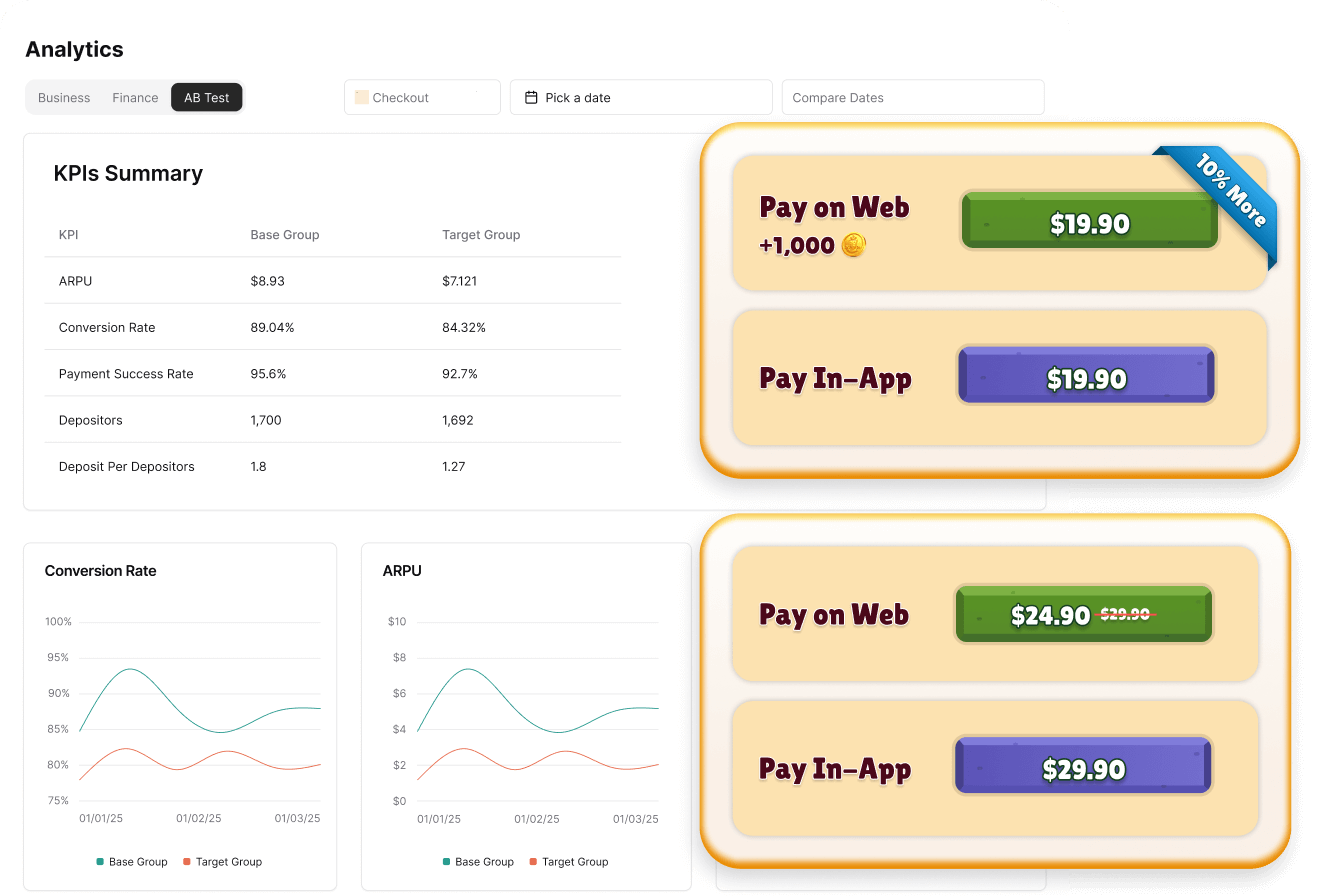
Crucially, we’ve already tested our approach and design to external payment links with our iOS SDK, powering 50+ roll-outs since the landmark U.S. ruling on April 30, 2025.
This makes us uniquely positioned to help publishers capitalize on the Android external payments opportunity. We’re using all the best practices we’ve learned to create the SDK you need to roll out and scale your Android external payments revenue - with speed and confidence.
Compliant
Our legal team is tracking regulation changes on a daily basis and makes sure we are adhering to regulation. In addition, as a Merchant of Record, behind the scenes Appcharge takes care of:
- Global sales tax compliance
- 500+ payment methods and 100+ currencies
- Saved payment details for repeat purchases
- Secure fraud and chargeback management
- Local entity infrastructure for faster approval
You focus on the player experience, we’ll handle your compliance and payment operations.
Let’s Build This Future Together
Whether you’re racing to ship Payment Links or mapping out your Q4 strategy, Appcharge is here to help you stay ahead. Let’s chat!
👉 Reach out to your account manager for early access and integration docs